
Multimodal clinical AI screening combines four technology pillars simultaneously in a single patient conversation: Voice AI (acoustic biomarkers), Computer Vision (436 data points — 127 facial micro-expressions plus arms, legs, torso), Speech Biomarkers (2,500+ linguistic features), and Generative Intelligence Assessment (real-time orchestration). This is how GIA® detects 46 conditions in 40 seconds.
The Science Behind Every Conversation.
GIA® is the Digital Human® who conducts every screening — powered by digitalhumanOS™, which combines four technology pillars: Voice AI, Computer Vision, Speech Biomarkers, and the Generative Intelligence Assessment. Together they screen for 46 clinical conditions in a single patient conversation, analyzing 2,500+ speech biomarkers and tracking 436 visual biomarker data points per screening.
Key Facts
- Pillars
- 4
- Biomarkers
- 2,500+
- Visual data points
- 436
- Conditions
- 46
Four technologies, trained on 12.3 million patients, analyzing 2,500+ biomarkers from a single conversation. This is how conditions stop going undetected.
This content is intended for informational purposes and does not constitute medical advice. Citing research does not mean this page or the product has been independently peer reviewed.
GIA.
The Digital Human® who conducts the screening.
GIA® is the patient-facing Digital Human® who conducts every screening conversation. She speaks with patients naturally, captures voice and visual biomarkers, and delivers results to clinicians — all without requiring staff time. Powered by the Generative Intelligence Assessment within digitalhumanOS™, GIA® reasons across modalities so clinicians don't have to piece it together themselves.

Voice.
Hear what stethoscopes miss.
A tremor in the vocal cords. A breath held half a second too long. Jitter and shimmer variations invisible to the human ear. Voice AI captures and quantifies acoustic biomarkers that signal early-stage neurological, respiratory, and psychiatric conditions — before symptoms become obvious (Journal of Speech, Language, and Hearing Research).

Vision.
See what the human eye overlooks.
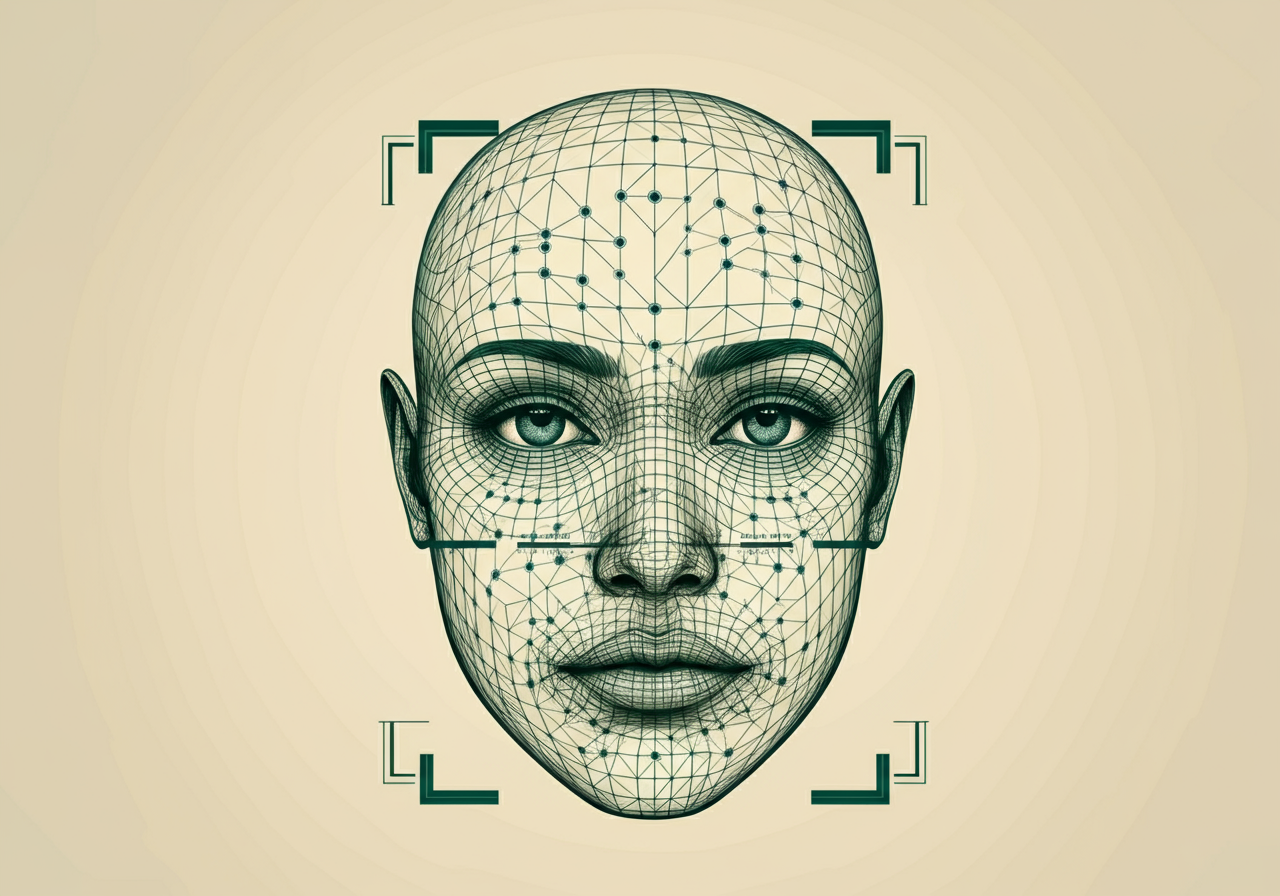
Computer Vision tracks 436 visual biomarker data points — 127 facial micro-expressions plus limb movement, gait patterns, and torso posture during a natural conversation (IEEE Transactions on Biomedical Engineering). No wearables. No lab equipment. Just a Samsung Galaxy device and a patient who is talking. The system identifies early indicators of tardive dyskinesia, Parkinson's, depression, and PTSD — conditions that often go unnoticed until they've progressed.
Speech.
Disease speaks before it is diagnosed.
Cognitive load patterns. Articulatory precision decline. Prosodic flattening. Speech biomarkers reveal neurological and psychiatric conditions at their earliest stages — from just 40 seconds of natural speech (Frontiers in Psychiatry, 2024). No specialized prompts. No clinical setting required. The patient just talks.

biomarkers extracted from a single patient conversation.
No lab work. No wearables. No additional staff time. The patient talks to Gia® for 40 seconds. The rest happens automatically. See our clinical research for peer-reviewed validation.
Engineered for Scale.
Behind every GIA® screening is an intelligent automation layer designed to operate at institutional scale — from a single facility to a nationwide network. Seamless content and revenue workflows handle everything from patient intake to EHR documentation to reimbursement capture, ensuring that every screening generates clinical value without creating operational drag.
This behind-the-scenes orchestration means your team never manages software updates, recalibrates screening protocols, or manually reconciles billing codes. The digitalhumanOS™ platform adapts to your census, your payer mix, and your clinical priorities — delivering zero-touch efficiency that scales effortlessly as you grow.
The result: advanced automation intelligence that handles the complexity so your clinicians can focus on what they do best — caring for patients.